
Corvette Track Coaching: Bob’s Progress Behind the Wheel
There is already plenty to talk about when a car combines 640 horsepower with a dog-ring, no-clutch transmission.
But the most interesting part of this story is not just the car.
It is how much Bob has developed as a driver.
Through continued Corvette track coaching, practice and work on different driving techniques, Bob has made a lot of progress behind the wheel of his yellow Corvette.
Recently, while I was at another track, I overheard someone talking about Bob and how quick he and his Corvette had become.
That put a big smile on my face.
I agreed with what I was hearing because I had seen the progress firsthand.
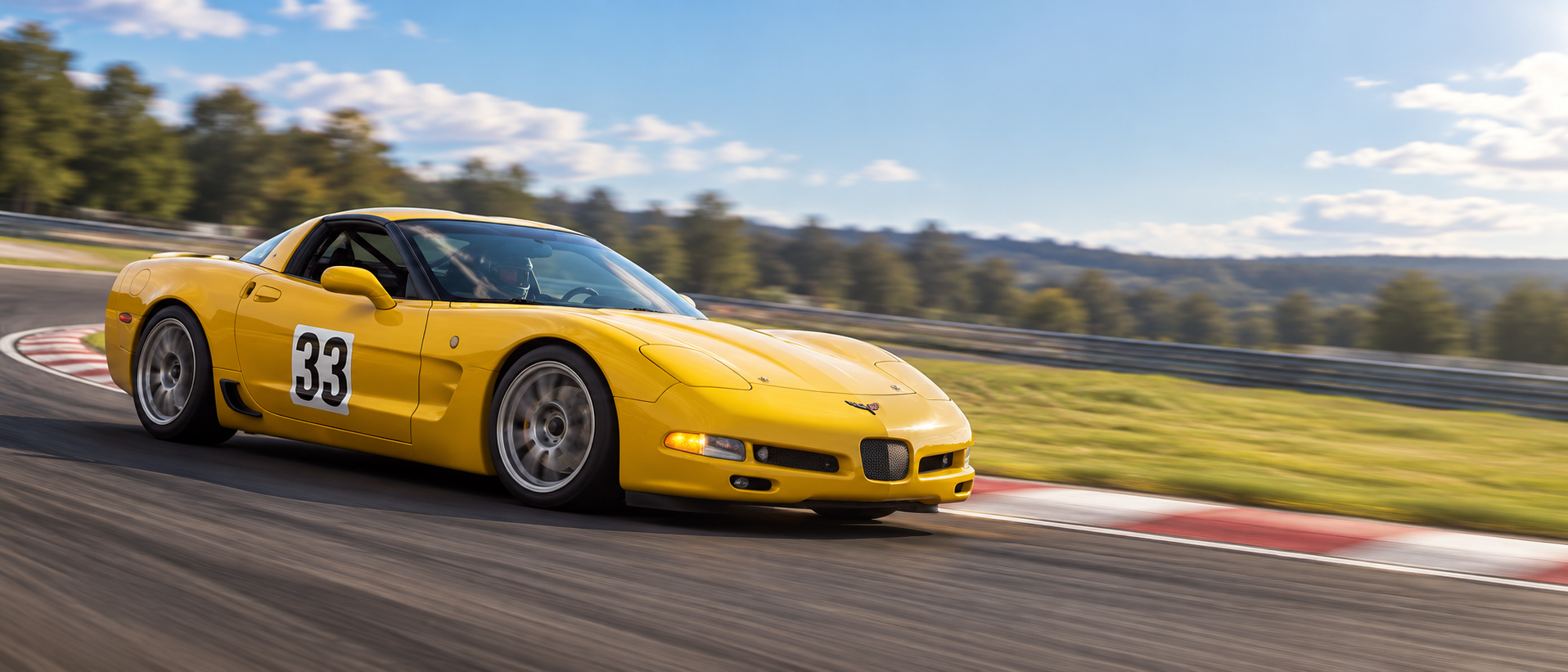
More Than Just a Powerful Corvette
A 640-horsepower Corvette is already an impressive piece of equipment.
Add a dog-ring transmission that does not require conventional clutch use during shifts, and the driving experience becomes even more focused.
But having a fast car does not automatically make someone a fast driver.
The driver still needs to understand how to manage the car, how to remain consistent and how to make good decisions throughout a lap.
That has been a major part of the work Bob and I have done together.
Corvette Track Coaching and Driver Development
Our Corvette track coaching sessions have focused on developing Bob as a driver rather than simply chasing speed.
There are many individual techniques that come together during a lap.
Those can include:
- braking technique
- corner entry
- steering input
- throttle application
- track positioning
- consistency
- vehicle feedback
- awareness and decision-making
The challenge is learning how to connect all of those pieces.
A driver may understand each technique individually, but applying them consistently while managing a powerful race car takes time.
Learning to Use the Power
With 640 horsepower available, throttle control becomes especially important.
The goal is not simply to apply full power as early as possible.
The driver needs to understand how much grip is available and how the car responds as power is added.
Smooth throttle application can help the car remain more balanced and predictable.
As Bob continued gaining experience, he became more comfortable managing that power and using it more effectively throughout the lap.
Building Better Braking Habits
Braking is another important part of driver development.
A powerful car can reach high speeds quickly, which makes braking technique even more important.
The objective is not always to brake later.
Consistency matters.
A repeatable braking point gives the driver a stronger reference for corner entry and makes it easier to evaluate what is happening with the car.
Working on those details can help create a more complete lap.
Improving Corner Entry and Track Position
Corner entry affects what happens during the rest of the corner.
A driver who enters too aggressively may compromise the middle or exit.
A driver who is too conservative may leave performance unused.
Through Corvette track coaching, we have worked on helping Bob find a better balance between speed, control and track position.
Those improvements can also make throttle application on corner exit easier to manage.
Adapting to the Transmission
The dog-ring transmission adds another element to the driving process.
A racing transmission can feel very different from a conventional road-car gearbox.
The driver needs to become comfortable with the timing and rhythm of the shifts while still managing braking, steering and throttle.
As experience builds, those actions can begin to feel more natural and become part of the overall rhythm of the lap.
When Other Drivers Notice the Progress
One of the best moments came away from one of our own coaching sessions.
While visiting another track, I overheard someone talking about Bob and his yellow Corvette.
They were commenting on how quick Bob had become.
Hearing that was rewarding because it showed that his progress was becoming noticeable outside of our own work together.
Bob has come a long way as a driver.
That improvement did not come from one single change. It came from working on multiple techniques and gradually putting them together.
Driver Development Takes Time
Progress in motorsport rarely happens all at once.
A driver may improve braking during one session, then work on corner entry during another.
Later, those skills begin to work together.
That is why consistent track time and structured coaching can be valuable.
The objective is to create a process the driver can continue using as their speed and experience increase.
For Bob, that process has helped him become increasingly comfortable behind the wheel of a very serious Corvette.
Continuing the Corvette Track Coaching Process
The car may have 640 horsepower, but the driver still has to make everything work.
That is what makes the development process so rewarding.
Bob has worked hard on several different techniques, and it has been great to see how far he has come.
He continues to improve behind the wheel, and I am looking forward to seeing where that progress takes him next.
Always great fun.
J
Learn more about driver coaching with Jason Hart Racing.
For coaching, testing or track support, you can also contact Jason Hart Racing.